
How to write an effective cover letter
Sending a resume without a cover letter is like knocking on a door and staying silent when they open it. Technically you've fulfilled your duty, but the opportunity to make a good impression went down the drain. The cover letter is your chance to speak directly with who can hire you, to explain why that particular job interests you and what you have to offer that doesn't fit in a list of experiences.
Many people see it as a tedious formality or directly ignore it. Mistake. When well written, a cover letter can make the difference between ending up in the discard pile or getting that call you were waiting for.
What It's Really For
The cover letter doesn't repeat your resume in narrative format. That's the first misunderstanding. Its function is to give context to your application, connect the dots the recruiter can't see just looking at dates and company names.
Here you explain why that company catches your attention, what motivates you about that specific position, and how your experience matches what they're looking for. It's the space where you can show you've bothered to research, that you understand what they need and that you have something concrete to contribute.
It also serves to fill gaps or clarify situations that look odd in your resume: a sector change, a period without working, training that seems not to fit. Here you can explain it without sounding like an excuse.
The Structure That Works
Start with contact information: your name, phone, email, and city. If you know who the letter is addressed to, put it: "Dear Ana Garcia" sounds infinitely better than "To Whom It May Concern." Look up the name on LinkedIn or the company website. It's worth the effort.
The first paragraph is your hook. Here you say what position interests you and where you saw the offer. But don't stop there. Add a sentence that captures attention, something showing genuine enthusiasm or a real connection with the company. "I've been following your renewable energy projects for three years and the opening of this position is exactly what I was waiting for" says much more than "I'm writing to apply for position X."
In the body of the letter—one or two paragraphs, no more—you talk about your relevant experience. Don't tell your whole work life, focus on what matters for that specific job. Use specific examples. If you coordinated a project, tell what you achieved with it. If you increased sales, say by how much. Concrete data weighs more than generic phrases.
You can also mention why that company in particular attracts you. This separates who sends twenty identical letters from the candidate who really wants to work there. It can be their culture, a recent project, their way of working. Whatever it is, but let it sound sincere.
The closing paragraph is short. You thank them for the time, reaffirm your interest, and make yourself available for an interview. Simple, direct, without begging.
Mistakes That Scare Any Recruiter
Copy-pasting the same letter for all offers is the most common and most serious mistake. It shows from miles away. If you don't have time to personalize each letter, better send just the resume. A generic letter does more harm than sending nothing. In fact, adapting your resume to different job offers is just as important as personalising your letter.
Another typical problem is writing like you're in 1995. "I hereby address you" or "I attach my resume for your consideration" sound outdated and cold. Write as you speak, with naturalness but maintaining professional respect.
It doesn't work either to tell your life since school. The letter isn't an autobiography. Focus on what's relevant for that position and leave everything else out. This is especially important if you're writing a resume without experience, where every word must count.
Spelling mistakes are unforgivable. A letter full of errors transmits carelessness, and nobody wants to hire someone careless. Proofread it several times, use the corrector, and if possible, ask someone to take a look. These are precisely some of the common resume mistakes you should avoid.
And please, don't write three pages. An effective cover letter fits perfectly on one page. If you've extended more, cut. Recruiters have little time and value synthesis ability.
Tips That Make a Difference
Research before writing. Look at the company website, their social media, recent news. The more you know, the better you can connect your profile with what they're looking for.
Use a close but professional tone. Don't be excessively formal or too colloquial. Find the middle point where you sound accessible and competent at the same time.
If possible, mention something that demonstrates you know the company or its sector. "I saw you just launched a new sustainable product line" or "I read your CEO's interview about innovation in the sector." These details count.
Be specific with your accomplishments. Instead of "I have experience in team management," say "I coordinated a six-person team during the launch of a product that exceeded sales forecasts by 40%." The difference is huge.
Save the letter as PDF with a clear name: CoverLetter_YourName_PositionName.pdf." Recruiters handle dozens of documents a day and you make it easier for them. Remember that optimizing your resume for ATS systems also applies to your letter format.
If you need inspiration to start, you can consult examples and free cover letter templates that give you a solid base to work from.
The Format Issue
Use the same typography as your resume to maintain visual consistency. A simple font like Arial, Calibri, or Helvetica works well. Size 11 or 12, normal margins.
If you're looking to maintain that visual consistency from the start, check out free resume templates by sector that already include a matching cover letter.
Align the text to the left, nothing justified that leaves weird spaces between words. Separate paragraphs with white space so the document breathes.
If you send the letter by email, you can write it directly in the message body instead of attaching it. It depends on what the offer asks. If it doesn't specify anything, the attached PDF is the safest option.
When You Really Need a Letter
There are offers that explicitly ask for it. There's no doubt, you have to send it. But even if they don't mention it, a good letter can help you, especially if there's something in your application that needs context.
If you're changing sectors, if you have periods without working, if your experience seems not to quite fit the position... the letter is your ally. There you can explain those points and turn what seems like a disadvantage into something reasonable or even positive.
For very competitive positions or in small companies where culture matters a lot, the letter also adds quite a bit. It's your way of showing personality and real motivation. And if the position requires English, don't forget to also prepare your cover letter in English with the appropriate structure and examples.
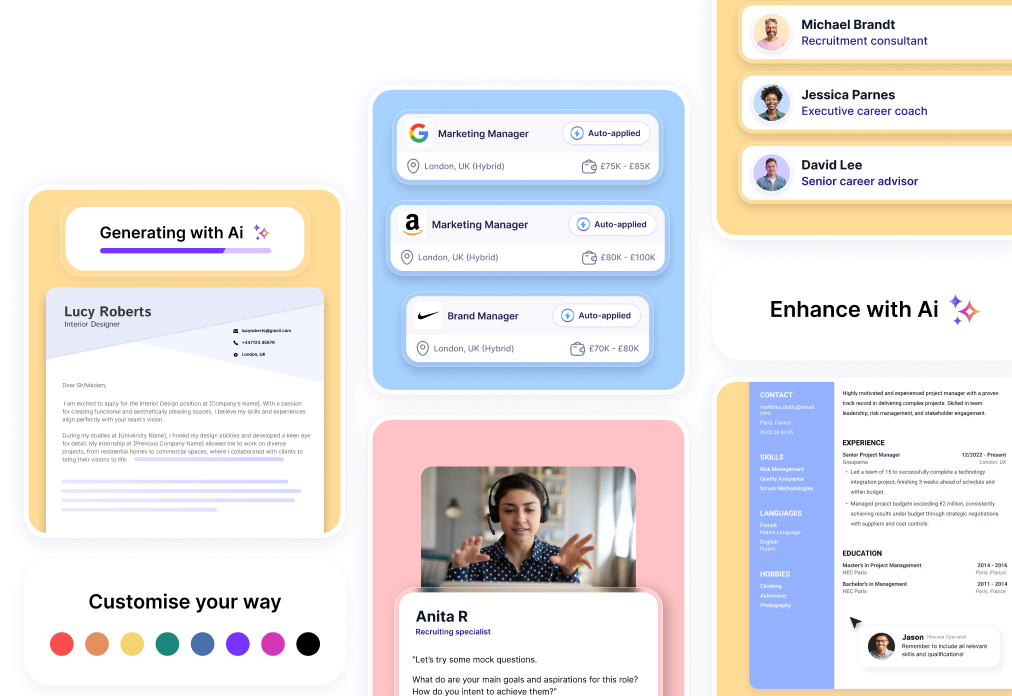
If you feel stuck or want to speed up the process, consider using AI to create your resume and cover letter. It can give you a solid starting point that you then personalize with your personal touch.
Writing an effective cover letter doesn't have to be torture. It's about being clear about why you want that job, what you can contribute, and why that company in particular interests you. If you take the time to personalize it, care for the details, and write with honesty, the chances they'll call you increase considerably. It's not magic, it's simply taking one more step that many other candidates aren't willing to take. And that, in the end, counts much more than it seems.