

Academic CV
Whether you're applying to a university degree, a research scholarship or an academic position, an academic CV plays a key role in your educational and professional development. At ToolResume, we'll help you create a CV that highlights your educational background, research, publications and professional achievements, to maximise your chances of success in the academic world.
Build my CV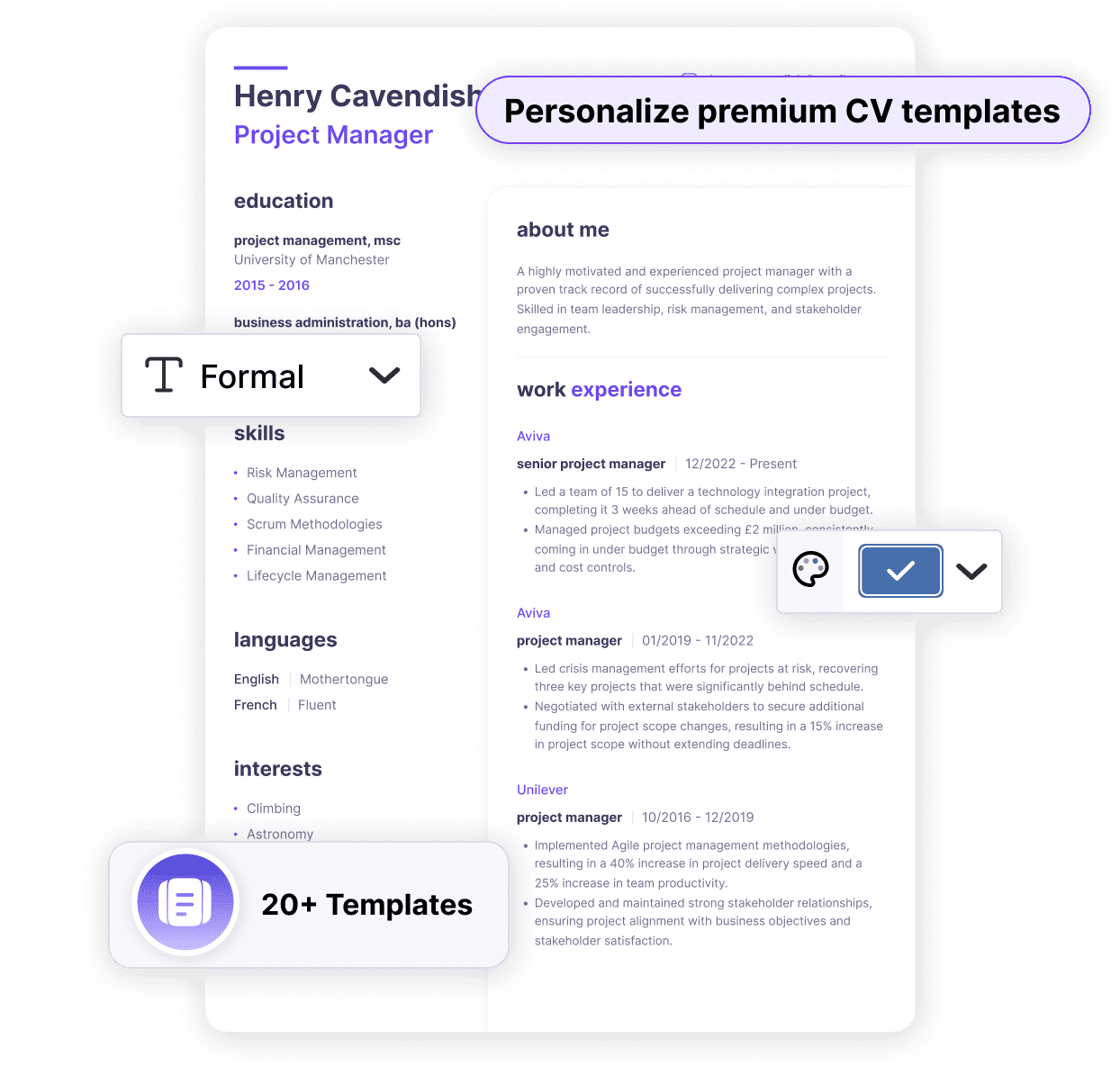
An academic CV is much more than just an administrative document. It reflects your academic career, your research skills, your publications and your academic projects. Whether you're applying for a university degree, a doctoral programme, or a position as a professor, researcher or associate professor, your faculty CV is your business card in the world of academia.
How do you write an academic CV?
Here are a few tips to help you write a powerful university CV:
Highlight your academic background:
Start with a section on your university education, showcasing your relevant degrees, specialisations, and honours. Mention your main field of study and any relevant specialisations.
Focus on your research and publications:
If you have conducted academic research or research projects, create a dedicated section to highlight these experiences. Include details of your research areas, collaborations, publications and any other significant contributions to research in your field.
Outline your research and technical skills:
Emphasise your research, analytical and methodological skills. Specify the research methodologies you are familiar with, the tools or software you use, and any technical expertise relevant to your subject area.
Provide a list of your professional and academic experience:
If you have professional experience related to your field of study, point out relevant positions held, responsibilities and accomplishments. Also include university experience such as internships, teaching assignments, tutorials, etc.
Provide academic references:
If you can, include academic references which can testify to your expertise and worth as a candidate. References may come from teachers, research supervisors, work colleagues or any other academic professional who can provide support for your application.
Pay attention to format and layout:
Use a professional, streamlined layout to highlight your educational background and skills. Use headings and subheadings to organise the content logically and hierarchically. Ensure your CV is clear, concise, and easy to read for recruiters or admissions panels.
Create an Academic CV
Benefit from the many online CV templates tailored to your industry sector and job. Select the style which suits you best to make you shine and help you get the dream job.


Best practices and mistakes to avoid for a University CV
Best practices
Adjust your CV for each application
Tailor your CV to each course or job you apply for. Highlight the most relevant elements for each application to maximise your chances of success.
Make sure your CV is well presented
Select a professional, uncluttered layout that emphasises your academic background and skills. Use headings and sub-headings to organise the information in a logical and hierarchical order.
Provide references
If possible, provide academic or professional references that can support your application. Make sure you obtain the prior agreement of the people you mention as references.
Mistakes to avoid
Lack of clarity
A confusing or badly structured university CV can be detrimental to your application. Make sure your CV is clear, concise and easy to read for recruiters or admissions panels.
Forgetting to highlight your achievements
Don't forget to showcase your educational achievements, such as publications, prizes, scholarships, etc. These can make all the difference in an academic application.
The basics of writing an academic CV
Before you start writing your academic CV, keep these five essential elements in mind:
Frequently asked questions about academic CVs
What are the main differences between an academic CV and a professional CV?
Academic CVs generally focus on academic background, research, publications and projects, while professional CVs put the emphasis on professional experience, skills and achievements in the workplace.
Do I have to include my grades and school reports in my academic CV?
It is generally not necessary to include your grades or academic record in an academic CV, unless this is expressly requested in the offer or application. Instead, concentrate on the elements that are most relevant to your academic and professional career.
How many pages should an academic CV contain?
An academic CV should be between one and three pages long, depending on your academic background, research and publications. Make sure you keep it concise and focus on the most relevant elements for your application
Should I include a section on my hobbies and activities in a university CV?
In most cases, it is unnecessary to include a section on interests and hobbies in an academic CV, unless they are directly related to your subject of study or can demonstrate skills that are relevant to the position or degree you are applying for.